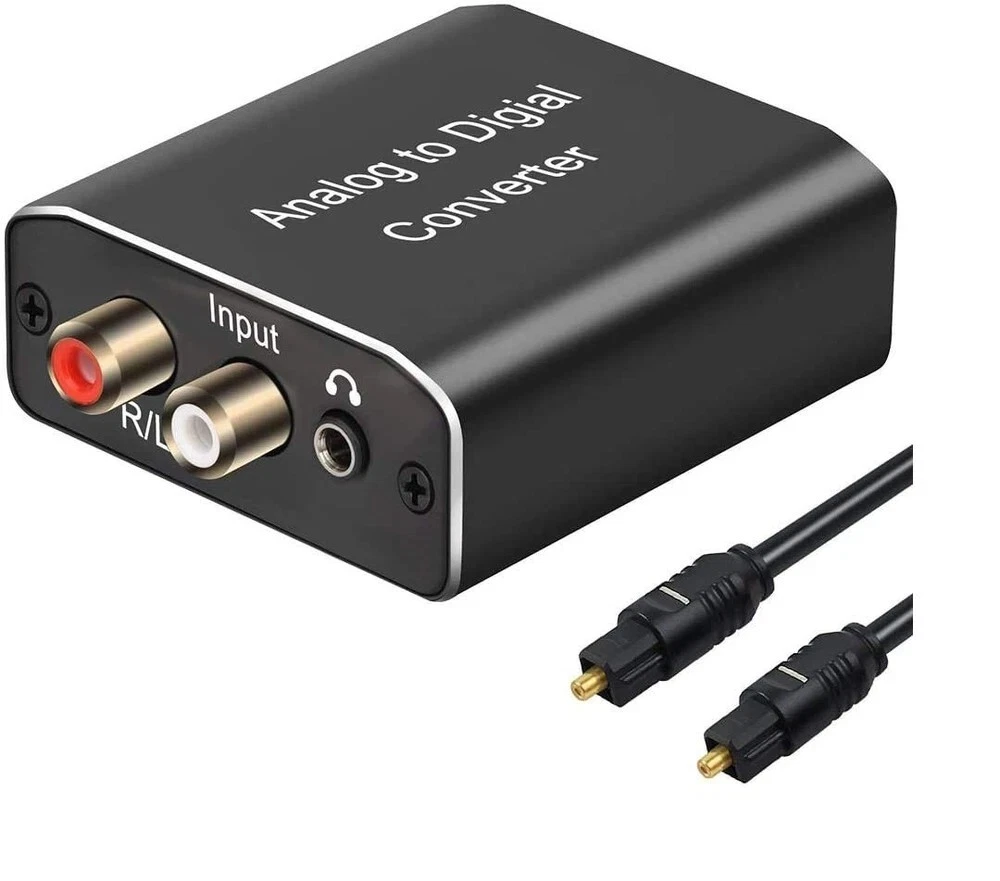
Analog to Digital Converter – Bridge Between Vintage and Modern Audio at Cosline Technologies
An Analog to Digital Converter (ADC) is an electronic device that converts analog signals (continuous signals) into digital signals (discrete values). This conversion is essential in various applications where analog signals need to be processed, stored, or transmitted in digital form. Here are some key features and details about ADCs:
- Conversion Process: Converts analog voltage levels into a digital representation, typically in binary form.
- Resolution: Measured in bits (e.g., 8-bit, 12-bit, 16-bit), indicating how many discrete values the ADC can produce. Higher resolution allows for more precise representation of the analog signal.
- Sampling Rate: The frequency at which the analog signal is sampled. Measured in samples per second (Hz), a higher sampling rate allows for better representation of fast-changing signals.
- Input Range: The range of input voltages that the ADC can accurately convert. This is important for ensuring compatibility with the analog signals being measured.
- Interface: Many ADCs come with various output interfaces, such as I2C, SPI, or UART, for easy integration with microcontrollers and digital systems.
- Power Supply: ADCs may require specific voltage levels for operation, which can vary based on the design and application.

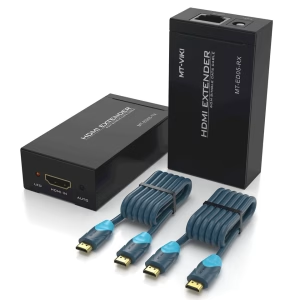 HDMI Extender HD 1080p 60M
1 × KSh 4,000.00
HDMI Extender HD 1080p 60M
1 × KSh 4,000.00